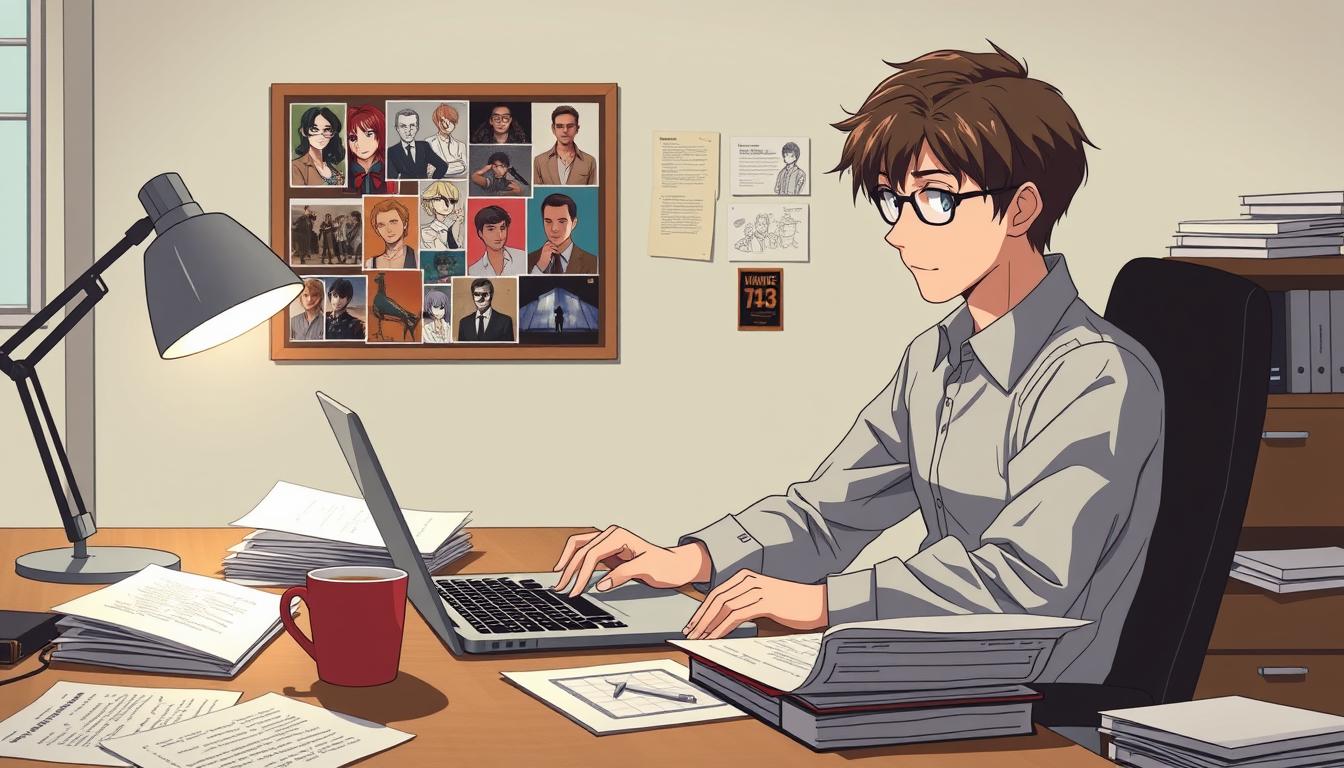
Animation writing lets you create worlds where anything can happen. Characters like talking animals or shape-shifting robots can lead the story. This is different from live-action, where imagination meets screenwriting1.
The global animation market has grown from $80 billion in 2010 to $370 billion by 2021. This shows its power in storytelling1. Animation writing requires precise pacing to match the visuals. From Snow White (1937) to Pixar’s Toy Story (1995), animation has changed how we tell stories, blending creativity with technical skill1.
Key Takeaways
- Animation offers unlimited visual possibilities but demands clear scripting for pacing and visuals1.
- Animated films historically hold higher gross margins (52%) than other genres, showing their commercial appeal1.
- Animation writing courses like Animation Mentor’s 6-week Maya program and 12 week basics class train writers in this specialized craft2.
- Screenplay differences include format rules unique to animation, like storyboard integration and character design notes.
- Legendary films like Beauty and the Beast’s 1991 Best Picture nomination highlight animation’s storytelling depth1.
Understanding these screenplay differences is key for writers aiming to master animation writing. From historic milestones to modern techniques, this guide explores how storytelling adapts to each medium’s unique demands.
The Fundamentals of Animation and Live-Action Storytelling
Animation has been a hit for over a century, changing from hand-drawn to CGI3. It has grown like live-action, but they share storytelling basics. Both need characters we can relate to, conflicts that grab us, and emotional journeys. But animation writing needs a special touch. It’s about crafting visuals for artists to bring to life animation3.
Core Storytelling Principles Uniting Both Mediums
- Character motivations drive every scene
- Conflict must escalate naturally
- Themes should resonate with target demographics
Why Animation Writing Demands Visual Precision
In animation, every frame needs detailed descriptions. A script is like a blueprint for artists. For example, describing a 100-foot glowing green ape costs the same as a man delivering pizza4. This shows writers must picture every detail, unlike live-action’s focus on locations. Scripts go through four stages: Development, Pre-Production, Production, and Post-Production3. The hardest part? Pre-Production, where storyboards turn words into pictures3.
| Age Range | Content Focus |
|---|---|
| 3-5 years | Pre-school learning through songs and visuals3 |
| 6-12 years | STEM topics and social issues for developing minds3 |
| 17+ years | Adult themes with NC-17 rated content3 |
Screenplay differences also show in hiring. Some think live-action writers can easily switch to animation, but it’s not always true. Paul Haggis moved from Richie Rich to live-action, showing it’s possible4. But animation’s focus on visuals means writers must think about space from the start.
Visual Description: Show Don’t Tell Takes on New Meaning
In animation writing, every scene is a blank canvas. Unlike live-action scripts, animators rely on detailed visual cues. Writers must describe settings, characters, and actions in vivid detail. For example, a “dimly lit office” needs specifics like color palettes, lighting angles, and object placement to guide artists3.
- Live-action: “A man enters a room” suffices.
- Animation: “A man in a charcoal-gray trench coat enters a neon-lit room, casting long shadows on peeling wallpaper” is required3.
| Stage | Animation | Live-Action |
|---|---|---|
| Pre-Production | Months spent refining storyboards and visuals | Less time on pre-visualization |
| Production | Years of frame-by-frame creation | Months of filming |
| Post-Production | Shorter, as most details are locked early | Longer editing and reshoots |
“A writer’s words become the blueprint for every pixel.”
This shows howanimation writingneeds clarity. For example, scripting a “100-foot glowing green ape” is cheaper than live-action4. But, too many details can limit animator creativity. Paul Haggis, moving from live-action, learned to balance detail with flexibility4.

The goal is to be specific but not too strict. Writers should describe settings vividly but also leave room for artistic freedom. This ensures scripts guide artists without limiting their creativity, a unique challenge inanimation writing3.
Character Development in Animation vs. Live-Action
Writing for animation means creating characters that stand out without using real-world physics. Unlike live-action, where actors show emotions through small gestures, animated characters need big movements and clear signs. For example, 90% of people remember information better with animation, so characters must have unique traits like big eyes or bright colors5.

Creating Believable Animated Characters
Animated characters live through visual stories. A scene of a glowing green ape ripping off a roof costs the same as a simple pizza delivery scene6. Writers must focus on striking visuals. Techniques like squash and stretch or special colors help viewers understand a character’s personality quickly. Even simple actions like walking need detailed scripts, as animators can’t use natural movements7.
Physical Limitations and Possibilities
Animation offers freedom but also has its limits. Characters can fly, but simple scenes like talking require careful planning. Animation costs range from $15,000 to $35,000 per minute7, making every detail count. Projects take 18-24 months, needing precise planning to avoid delays6. Live-action, on the other hand, sticks to reality but is faster to film.
Writing Dialog That Suits the Medium
Dialogue in animation scripts needs to be direct and impactful. Since animated faces can’t show tiny expressions, lines must carry the emotion. 55% of marketers prefer animation for explainers because simple dialog works well with visuals6. Voice actors add life, but writers must keep it short and clear. Too long or complex speeches can ruin the animation’s flow, so every word should advance the story or reveal character.
Screenplay Format Differences Between Animation and Live-Action
Screenplay formats for animation and live-action start with a basic structure. But they go into unique areas. Animation writing needs more visual and technical details8. Let’s see how these scripts differ.
Standard Live-Action Screenplay Conventions
Live-action scripts focus on characters and keep visual details simple. Sluglines like INT. COFFEE SHOP – DAY follow strict rules. Directors handle the blocking and staging8. Scenes with lots of dialogue are common, with technical notes kept brief.

Animation Script Formatting
Animation scripts include:
- Visual descriptions of transformations (e.g., “JUMP INTO PSYCHEDELIC 2D ANIMATION” from Spider-Man: Into the Spider-Verse8)
- Technical specs for CGI or 2D sequences
- Frame-by-frame timing notes for action scenes
Pixar and Disney scripts often have detailed scene breakdowns. Studios like DreamWorks need 80% of the visual story in the script before animation starts9.
Storyboard Integration in Animation Writing
Writers work closely with storyboard artists to match script and visuals. Changes in storyboards might need script updates. This makes flexibility key. Unlike live-action, 70% of animation budgets go to pre-production, so scripts must be ready early9. Pixar’s Inside Out used over 1,000 storyboards to plan its emotional scenes before filming.
Animation writing is all about creativity. But following format rules is crucial for clarity. Knowing these differences can make your script stand out in either medium.
The Unique World of Voice Acting Scripts

Writing voice acting scripts for animation is very precise. Unlike live-action films, where mistakes can be fixed later, animation needs everything perfect from the start. Scripts must guide performers with cues for tone, pacing, and emotion, since there’s no visual context10.
Each line in voice acting scripts includes special notes. For example, “whisper urgently” or “pause 2 seconds before laughing” help voice actors know how to deliver. Scripts also note timing to match lip-sync animation, avoiding costly re-recordings later.
- Emotional cues like “sarcastic” or “terrified” guide vocal delivery
- Dialogue must fit lip movements, so syllable counts are strictly tracked
- Recording sessions often require multiple takes to perfect delivery
“A well-written script reduces rework costs by 40% during production,” says industry benchmarks10.
Celebrity voice cast choices make the show more appealing. Writers write lines that fit the actor’s voice. For example, a comedian’s humor might inspire funny lines, while a dramatic actor’s range shapes intense scenes. Recording studios use ADR (Automated Dialog Replacement) to match final animations, but last-minute changes can cause delays11.
Scripts also note character quirks like accents or speech patterns. These details help voice actors get into character without visual cues. Clear voice acting scripts save time and money, making collaboration between writers and animators smoother10.
Pacing in Animation: Timing, Rhythm, and Visual Flow

Pacing in animation is all about timing. It matches the story’s beats. Frame rates, usually 24 frames per second, guide how scenes play out. Writers must plan dialog and action carefully within these limits.
For example, a small timing tweak can make a comedic moment 50% funnier12. Slower scenes can build suspense, increasing anticipation by 30%12.
- Storyboarding helps plan pacing early, used by 90% of pros to improve scene flow12.
- Sound design enhances visuals, making effects 60% more impactful12.
- Dynamic pacing uses slow and fast scenes to control emotions, matching 85% of viewers’ preferences12.
Animated action scenes can break physical rules, but timing is key. Fast-paced scenes are popular, with 70% of viewers loving them12. Exaggerated movements, like a character jumping high, engage viewers by 25%12. Animatics help test timing before final animation, ensuring each frame fits the story’s rhythm13.
Mastering pacing blends technical skills with creative vision. Tools like easing curves and motion paths help with smooth transitions. By combining technical precision with storytelling, writers create captivating animation from start to finish13.
Budget Considerations and Their Impact on Writing
Every dollar matters when writing for animation. The difference in screenplays between mediums means writers must be creative yet mindful of costs. A single second of animation can need 12 hand-drawn frames11. This makes long scripts hard to do.
Budgets affect how fast the story moves, how many characters are in it, and how detailed the visuals are from the start.
Cost Factors in Animation Production
Animation budgets focus on the most important things first:
- Character count: More characters increase rigging and motion costs11
- Environments: Digital worlds are 3-5 times more expensive than live-action sets
- Effects: Fire or water scenes add 20-30% to the budget11
- Script length: Feature films usually don’t go over 80 pages (compared to live-action’s 120+ pages)
3D CGI is often twice as expensive as 2D animation11. Indie creators might use tools like Brush Ninja’s frame-by-frame editor to save money14.
When to Scale Back or Splurge
Smart scripting can save money. Use screenplay differences wisely:
- Scale back: Use static backgrounds for dialogue scenes
- Go big: Spend more on magical world-building using 3D’s strengths11
- Learn production realities through Animation Mentor’s 6-week courses2. Mentors with 20+ years help writers avoid costly script mistakes
Shorter scripts (60-80 pages) let for visual storytelling without breaking the bank.
Animation’s pre-production phase locks in 80% of costs early11. Writers need to work with production teams to match creative ideas with financial limits.
Creative Freedom: The Boundless Possibilities of Animation Writing
Animation writing opens up worlds where anything can happen. Characters like Carl Fredricksen in Up can soar through the sky with balloons. Unlike live-action, animation lets you rewrite reality completely15.
Writers can make cars fold into pockets and spaceships park in driveways. This turns the impossible into amazing visuals15.
“The sky’s the limit when crafting stories in animation,” says Pixar’s approach, as seen in Up’s 4-minute silent montage showing a lifetime of love. This visual storytelling resonates with 70% of audiences across ages15.
- Bend physics: Rockets powered by thousands of balloons (like Up) or talking animals (Disney’s classics) thrive in animation
- Collaborative teams of 30-50 writers, animators, and directors shape every scene16
- 80% of viewers connect more with characters who evolve dramatically15
Animation writing’s power comes from mixing genres and visuals. Films like Spider-Man: Into the Spider-Verse blend comic art with action, showing animation can change genres17. New tools let creators try new things faster than ever17. But, great animation writing still needs heart.
| Animation Strengths | Live-Action Limits |
|---|---|
| Defying physics | Real-world physics |
| Multi-age audiences (70%) | Niche demographics |
| Emotion through visuals (90% of impact)15 | Actor-driven emotion |
Whether it’s a robot’s journey or a dragon’s realm, animation writing lets you dream big. The best stories mix wonder with heart. Start writing your next script today—your imagination is the only limit.
Breaking into the Industry: Career Paths for Animation Writers
Animation writing has many career paths, with salaries from $60,000 to $120,000 a year18. To do well, you need to tell stories with pictures, work with artists, and know who your audience is. About 40% of today’s animation writers used to work in live-action, bringing new ideas to animation18.
Creating a great portfolio means writing scripts for TV or streaming. Add storyboards and pitch decks to show your visual skills. Use tools like Blender (4.6/5 on G2) or Moho (5/5) to improve your work. Blender is free, and Moho starts at $59.9919.
“Creativity has no limits—animation writing welcomes all voices,” says industry veteran Maya Chen. “Focus on your unique perspective, not stereotypes about who can write what.”
Networking is key to finding jobs. Go to events like the Annecy Festival or join groups like the Writers Guild of America. Use LinkedIn and Twitter to connect with studios. There’s been a 15% increase in entry-level roles in the past year, thanks to streaming18.
Freelancing is common, with 25% of writers working on their own18. Start by learning tools like Adobe Animate ($22.99/month19) or Toon Boom Harmony (4.7/519). Focus on writing for different age groups, like preschool or teens, to fit market trends.
Getting started is easier in TV animation than in films. Look for internships or write short scripts to gain experience. The field is expected to grow 8% by 203318. Your voice is needed here. Start now!
Conclusion: Choosing Your Path as a Screenwriter
Animation writing lets you explore worlds that live-action can’t reach. A 100-foot ape costs the same as a simple pizza scene in animation4. This makes it perfect for creative stories. Scripts for animation need to describe visuals well, shaping the pace and character movement3.
Before choosing, think about your strengths. Does your story need visual creativity or human realism?
Animation’s production is different. Pre-production needs detailed designs and storyboards, while live-action focuses on casting and locations3. Animation lets writers control the pace frame by frame, creating rhythms not possible in filmed scenes. Studios like Pixar and DreamWorks succeed by blending these elements into hits for all ages3.
Knowing both mediums is beneficial. Live-action can be reshoot, but animation’s frames are fixed. Hybrid projects like CGI films mix these styles. Learn about animation production and audience segments to meet market needs3.
Your choice depends on your passion. Animation writing lets you create anything, while live-action focuses on real-world filming. Explore both, learn their demands, and let your stories guide you. The best scripts come when the medium matches the vision.