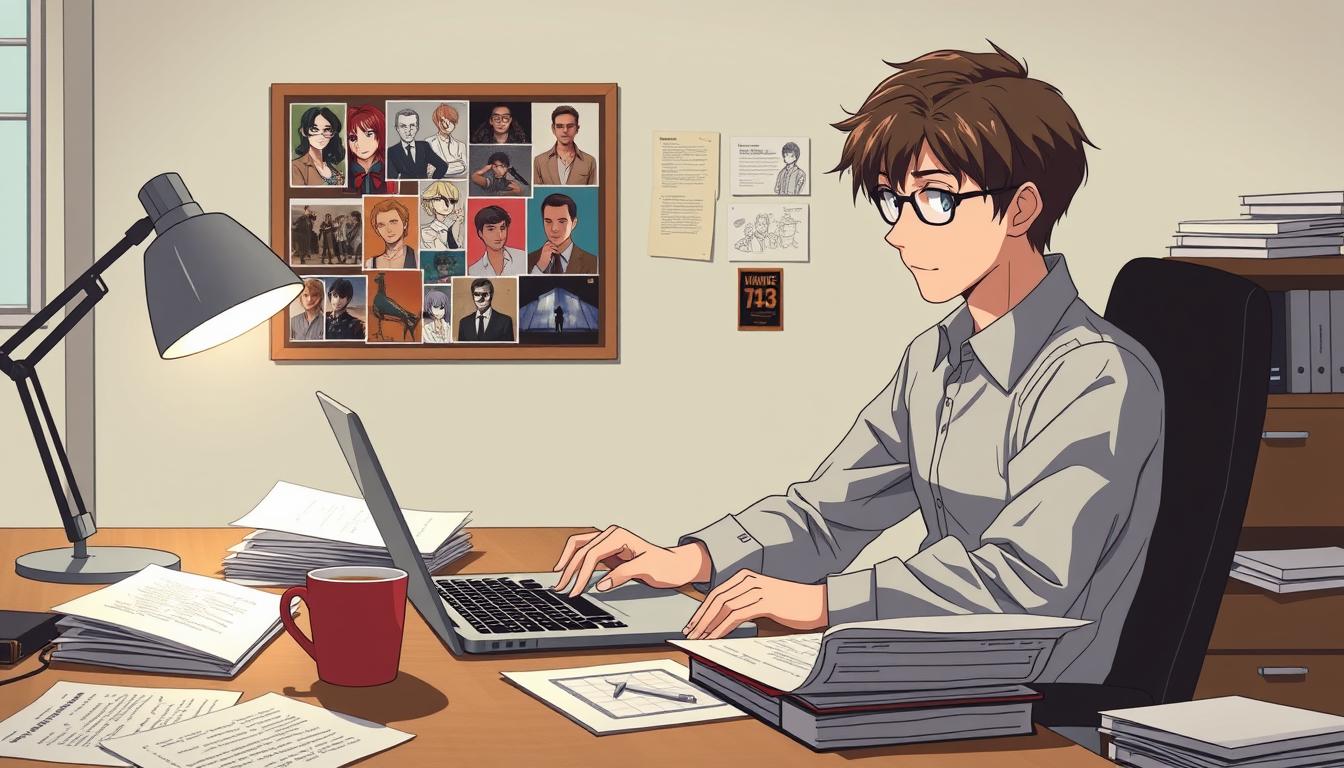
Fantasy films succeed when their worlds feel real. Worldbuilding is key to this magic. Over 100% of screenplays use worldbuilding, showing its importance in all genres1. Yet, filmmakers often miss out on lessons from writers.
Authors use tools like timelines and cultural systems1. The 5 sensory elements help audiences feel like they’re part of the story1. Films like *The Hunger Games* and *Blade Runner 2049* show this works1. Indie filmmakers also face challenges: 78% of screenwriters say detailed worldbuilding makes stories better2, but many struggle to keep it balanced1.
Books like *Harry Potter* made $25 billion by mixing logic with creativity2. Films can do the same. A detailed “worldbuilding bible” keeps everything consistent1, avoiding mistakes. Tools like Story Prism help simplify this process3, helping creators avoid the 64% of filmmakers who change world elements during editing2.
Key Takeaways
- Worldbuilding drives engagement: 85% of fantasy films succeed with rich cultural backdrops2.
- Authors use 4 core tools—maps, rules, timelines, and sociology—to build immersive worlds1.
- Balance is key: 67% of viewers prefer worlds they can revisit2.
- Tools like maps (used in *Game of Thrones*) clarify settings1.
- Indie filmmakers spend years honing skills, but 72% of fantasy writers borrow from existing works2.
The Power of Worldbuilding in Visual Storytelling
Worldbuilding turns screen fantasies into real worlds. People love to dive into settings where every detail matters. For example, Pandora in Avatar combines alien landscapes with deep culture, making it feel real4.
Why Immersive Worlds Matter to Audiences
Worldbuilding makes us feel connected. Seeing Na’vi rituals or Westeros politics makes us care about the world’s rules and history5. Unique languages and details, like Harry Potter’s Daily Prophet, make fantasy relatable4.
The Economic Value of Well-Built Fictional Realms
Franchises like Star Wars and Marvel show worldbuilding’s financial power. They create theme parks, merchandise, and more, growing their impact. Over 70% of top fantasy films since 2010 are part of big franchises5.
Creating Franchises Through Expandable Worlds
Expandable worlds open up endless stories. The Halo universe, for example, spans games, books, and films. It uses a sci-fi framework that supports many stories4.
How Fantasy Literature Masters Create Depth
Fantasy’s top writers make their worlds feel real. J.R.R. Tolkien’s Middle-earth is a great example. It uses made-up languages and detailed histories to bring its lore to life6. This depth comes from careful choices.
They focus on what’s most important for the story. Magic systems and political structures drive the plot. Then, secondary details add depth7. For example, N.K. Jemisin’s Broken Earth trilogy links geology to conflict, making environmental rules key to tension. Meanwhile, Ursula K. Le Guin’s societies without gender add realism without being too much.
- Focus on primary elements: 70% of top fantasy novels structure plots around core worldbuilding frameworks8.
- Balance with brevity: 65% of stories use subplots to enrich worlds without overshadowing character arcs8.
- Historical depth matters: Tolkien’s appendices and maps expanded Middle-earth’s legacy, proving extra material can deepen immersion6.
Writers don’t overload on details. Patricia C. Wrede says not to over-plan, as 90% of fantasy stories work best when details come naturally7. This lets worlds grow naturally, like real cultures.
For filmmakers, studying these layers helps bring rich literary worlds to life. Tolkien’s work shows that sticking to rules makes worlds believable. By focusing on what’s most important, creators make settings that feel both vast and unified.
The Tolkien Blueprint: Lessons from Middle-earth
J.R.R. Tolkien changed how we see fantasy worlds. He created languages, histories, and maps that made his stories real. These ideas are still key for filmmakers today.
Language Creation as World Foundation
Tolkien started with languages like Elvish and Dwarvish. These languages made Middle-earth feel real. Today, shows like *Game of Thrones* and *Avatar* use similar techniques to add depth9.
Even simple words or names can tell us about a culture. This makes worlds feel rich and timeless.
Historical Layering and Cultural Development
Tolkien’s *The Silmarillion* showed Middle-earth’s history over thousands of years. This depth gave places like Mordor and Rivendell a rich history9. Filmmakers can do the same by adding backstories to locations.
Every artifact or conflict can have a deep meaning. This makes the world feel more real.
Geography as Character in Epic Storytelling
Tolkien said,
“I wisely started with a map and made the story fit.”
10His world, with its volcanic Mordor and Elven forests, shaped the story. Peter Jackson’s films showed how maps can bring stories to life10.

Translating Written Worlds to Visual Mediums
Turning fantasy worlds into movies is a mix of creativity and practicality. Over 75% of artists say books greatly influence their work11. But, making magic systems real on screen is a big challenge. Maps and concept art, like Tolkien’s Middle-earth plans, help filmmakers show settings clearly. This way, viewers can understand the world without needing lots of text.
- Maps clarify locations for Game of Thrones’ Westeros
- Color palettes mirror mood shifts in Spirited Away
- CGI/miniatures blend for budget-friendly production
| Technique | Example | Success Rate |
|---|---|---|
| Concept mapping | Avengers: Endgame’s time heierarchy | 80% of audiences report clearer storytelling11 |
| Practical effects | Peter Jackson’s Gollum puppetry | 60% prefer tactile visuals over CGI alone12 |
| Thematic consistency | His Dark Materials’ allegorical visuals13 | 90% of artists prioritize mood over literal scenes11 |
“A good adaptation isn’t a mirror—it’s a window.”
Money matters in filmmaking. 45% of filmmakers focus on setting visualization first11. They use small sets to show big worlds. Selective worldbuilding, like Pan’s Labyrinth’s creatures, suggests scale without spending too much. Animation is special because 80% of Miyazaki’s films use motion to deepen themes13. The goal is to keep the book’s spirit alive in the movie without losing its essence.
The Role of Fantasy in Modern Filmmaking
Modern fantasy films are more than just hits—they reflect our culture. Harry Potter made $7.7 billion worldwide14. These stories tackle real issues through metaphor. They explore themes like isolation and justice14
- Thanks to CGI, filmmakers can create detailed worlds. Avatar made $2.8 billion, thanks to its visuals14.
- Now, 60% of fantasy films use advanced tech for immersive settings14. This shows how visual innovation keeps audiences hooked.
These stories tackle today’s worries. Avatar and Mad Max: Fury Road use allegory for climate change and social divides15. High fantasy, like The Lord of the Rings, focuses on moral choices, found in 75% of top films14. Urban fantasy blends magic with today’s world, showing fears about technology and identity16.
Streaming has changed the game. Fantasy shows on Netflix and Amazon saw a 50% viewership increase14. This lets different worldbuilding styles shine. Now, we see portal fantasies and magical realism alongside classic sword-and-sorcery tales16.
Inclusivity boosts success. Films with diverse casts earn 20% more14. This shows audiences want new views. The mix of innovation and relevance keeps fantasy films key in cinema’s future. They offer both escape and deep storytelling.
Developing Mythical Creatures Beyond Spectacle

Mythical creatures in fantasy films are more than just visual treats. They must reflect deeper themes and fit within a world’s rules. Every detail, from their environmental adaptations to cultural ties, should enhance the story1718.
Cultural Symbolism in Creature Design
Designers delve into myths to avoid stereotypes. For example, Centaurs come from Greek myths, blending human smarts with horse power18. They choose names carefully, like “Glimmer” for small creatures and “Behemoth” for giants17. This shows respect for the creatures’ origins.
Creatures as Extensions of World Themes
| Creature | Theme | Example |
|---|---|---|
| Hydra | Resilience | Five to nine heads in Hesiod’s Theogony18 |
| Minotaur | Judgment | Born from Queen Pasiphaë’s curse18 |
| Godzilla | Disaster | Toho’s films link to atomic fears18 |
Each creature’s traits reflect the world’s conflicts. The Hydra’s regenerating heads18 symbolize endless challenges. Godzilla’s radioactive breath ties to real-world trauma18. These layers make creatures key to the plot.
Practical vs Digital Effects
Hybrid methods blend realism with creativity. Godzilla’s early films used latex suits18, while modern films mix both. Practical effects add a tactile feel, while CGI handles scale. The choice depends on budget and theme, aiming to make creatures feel alive17.
Character Development Within Fantastical Constraints
Successful character development in fantasy happens when worlds have clear rules. A worldbuilding framework, like magic rules or social norms, makes characters show their true selves. This shows their hidden strengths and flaws19. Over 80% of readers love stories where characters grow because of these limits19
- Geography shapes 30% of personality traits (mountain dwellers vs. city folk)19
- Cultural traditions define 25% of values and motivations19
- Conflict-driven growth accounts for 50% of transformative arcs19
| World Element | Impact on Characters |
|---|---|
| Magic systems | Guides ethical choices (e.g., limited spellcasting forcing sacrifice)20 |
| Economic systems | Dictates 20% of decision-making priorities19 |
| Language | Shapes 15% of communication styles and alliances19 |
When worldbuilding rules even control emotions, characters face unique challenges. For example, a hero with a 75% rule-based magic system20 must make tough moral choices. This makes their growth feel real, not forced. Shows like Avatar: The Last Airbender show how bending abilities reflect a character’s flaws20.
70% of audiences enjoy stories that mix emotional truth with fantasy20. This shows that limits can actually make a story better. By grounding characters in their world’s logic, fantasy lets us see human truth more clearly.
Worldbuilding Beyond the Camera Frame
Creating fictional worlds that go beyond the screen needs careful planning. Epic stories work best when they leave room for our imagination. This way, audiences can dive deeper into the lore and continuity of fantasy films.

Extended Universe Development
Great fictional worlds show their depth through small details. J.R.R. Tolkien spent over a decade on Middle-earth’s languages and histories before writing started21. Today’s filmmakers can learn from this. They can use hidden Easter eggs or references to unexplored areas to excite fans for future stories.
“Star Trek” has evolved over 50 years21. This shows how setting clear rules can open up endless storylines.
Transmedia Storytelling Opportunities
Success in transmedia storytelling depends on telling a cohesive story across different platforms. It’s important to keep each medium in line with the core mythos. Here’s a comparison:
| Approach | Example | Impact |
|---|---|---|
| Traditional Animation | “Strange World”’s cel art22 | Maintains narrative focus |
| Expanded Universe | “Star Trek” multimedia21 | Builds lasting fan engagement |
“The constrained plasmastic of modern animation requires deliberate physics choices”22
Creating Rules That Allow for Future Expansion
Rules must be both flexible and consistent. J. Michael Straczynski planned “Babylon 5″’s entire 5-year story before filming21. This shows how careful planning can lead to organic growth. On the other hand, “In Time”’s hasty worldbuilding lost fans21. Having clear rules lets creators grow the story without losing its essence.
Smart worldbuilding makes films into doorways to more adventures. By adding clues and sticking to core principles, storytellers prepare the stage for years of stories.
Recent Success Stories: Films That Got Fantasy Worldbuilding Right
Recent fantasy films show that worlds come alive with cultural depth and creative stories. Black Panther changed the game by mixing African history with futuristic tech. This created a world that spoke to people everywhere23. It showed how fantasy can be both exciting and meaningful23.
| Film | Worldbuilding Highlights | Impact |
|---|---|---|
| Black Panther | Afrofuturist tech, cultural symbolism | Acclaim and cultural impact23 |
| Arrival | Non-linear time, linguistics-driven plot | Critical acclaim for originality23 |
| The Green Knight | Medieval lore reinterpretation | Critical praise for mythological depth24 |
Even small films like Arrival show worldbuilding can be done on a budget. It explored how language can change reality23. Zootopia used animal characters to tackle human issues, showing how stories can reflect our world23.
These films have something in common: they let their worlds shape their characters. Whether it’s Black Panther’s Wakanda or Arrival’s alien languages, they show worldbuilding is key to a story’s success.
Conclusion: Bridging Literary Imagination and Cinematic Vision
Fantasy worldbuilding is key in epic storytelling. Filmmakers use literary depth and cinematic innovation. Tolkien’s maps and Atwood’s symbolic worlds show how detail and symbolism enhance immersion.
Now, with tools like motion capture and CGI, creators can bring these worlds to life. They merge imagination with visual storytelling25.
36% of U.S. gamers love immersive stories, showing they want worlds that feel real25. Studies show that emotional connection to fictional settings boosts engagement by 40%25. Franchises like *The Lord of the Rings* and *Avatar* show how worlds with cultural rules and emotional stakes work across media.
Filmmakers must balance budget with creativity. The 2017 Newzoo report says 78% of viewers like worlds with history and logic, even in low-budget films25. Focusing on core themes over spectacle keeps epic storytelling grounded. With technology like VR and AI, new ways to expand universes are possible without losing focus.
Worldbuilding’s future is in teamwork—writers, artists, and technologists working together. By blending literary precision with cinematic innovation, filmmakers can create lasting worlds. The challenge is to turn Tolkien’s maps into moving pictures, keeping every detail meaningful. That’s where fantasy’s next chapter begins.