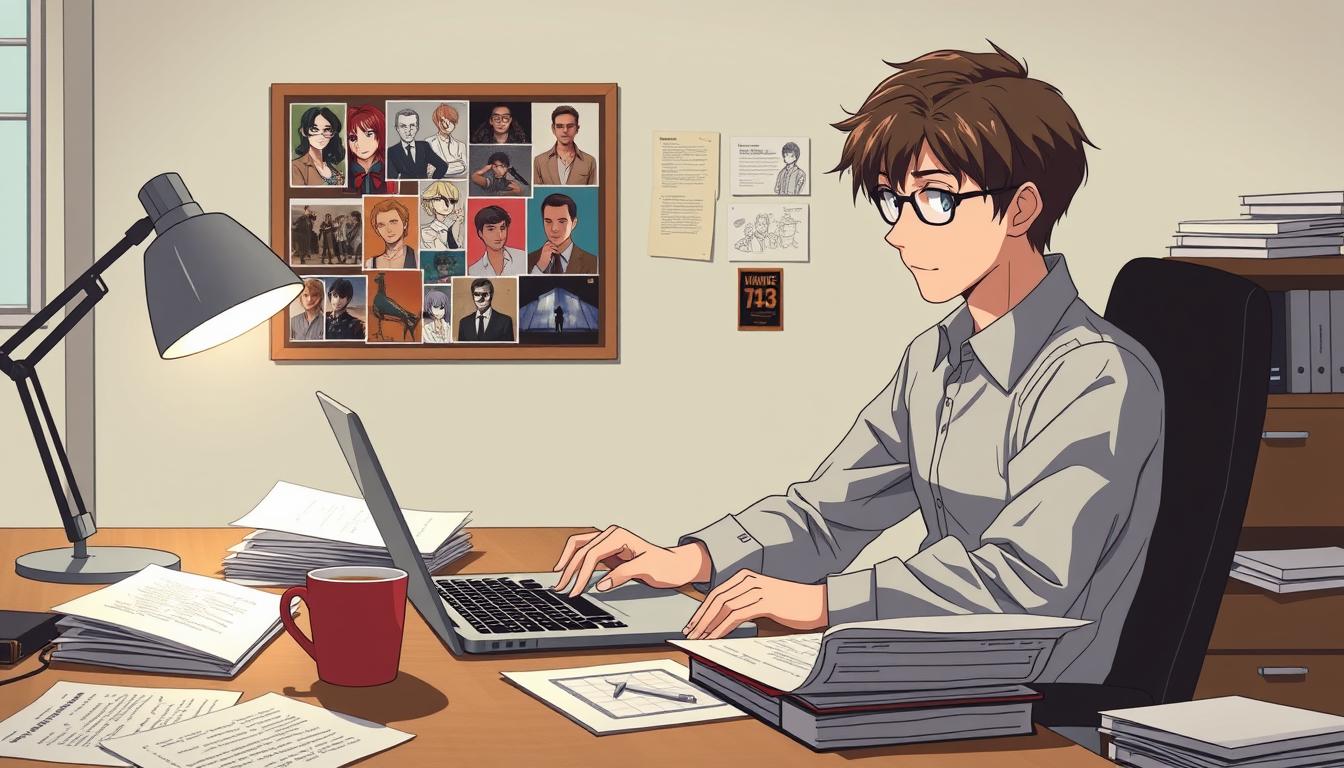
Screenwriting is the art of telling stories for films and TV shows. A good screenplay is about 125 pages long1. It guides directors and actors in bringing stories to life. This mix of creativity and detail makes scripts the heart of movies1.
More than 75% of hit movies follow a three-act structure2. This shows its lasting power. Screenwriters focus on characters and plot, making each scene count1. Conflict in every scene keeps viewers hooked, with 70% of great scripts using this method2.
Revising is key. Many writers tweak the first half of their scripts 40-50 times1. They work on dialogue and pacing. Top scripts avoid long explanations, using subtle hints to add depth. This approach raises audience interest by 40%2.
Key Takeaways
- Average screenplays span 125 pages with 75% of hits using a three-act structure12.
- 70% of engaging scripts use scene-based conflict to maintain interest2.
- 40-50 rewrites for the first half ensure polished drafts1.
- Subtext boosts retention by 40% through layered narratives2.
- Character goals increase production chances by 50% when clear2.
Introduction to Screenwriting
Screenwriting is a mix of creativity and technical skill. It’s more than just a story; it’s a guide for filmmakers. It started in the 1920s with the introduction of sound in movies, adding dialogue and sound effects to storytelling3.
Good screenwriting has three key parts: plot, theme, and characters3. These elements come together to make a story that grabs your attention. The process includes brainstorming, outlining, and making changes3. Tools like Final Draft or Celtx help with formatting, making it easier to follow rules3.
| Stage | Description |
|---|---|
| Brainstorming | Generating ideas and concepts |
| Story Development | Refining narrative structure |
| Character Development | Building detailed character backstories |
| Outlining | Mapping scenes and plot points |
Common mistakes include using too many clichés or bad formatting3. Courses like Toronto Film School’s program teach beginners how to avoid these errors4. Their 6-week classes, with only 15 students, provide direct help4. Signing up by May 2025 gets you feedback and networking opportunities4.
The Fundamentals of Storytelling
Every great screenplay starts with strong storytelling. Whether adapting a novel or crafting an original idea, the core elements of narrative drive every decision. Let’s break down how to turn ideas into compelling screenplay format blueprints.
Understanding the Three-Act Structure
Screenplays thrive on the three-act structure: setup, confrontation, resolution. Act 1 introduces characters and conflict5. Act 2 raises stakes through obstacles, while Act 3 delivers climactic resolution. Over 100,000 scripts are written yearly, but only those mastering this structure advance5
Building Conflict and Tension
- Conflict must feel urgent—characters face literal or emotional struggles.
- Midpoints force protagonists into the antagonist’s world, escalating tension.
- Without strong conflict, scripts fail—this is the most frequent flaw noted in submissions5.
Creating a Compelling Premise
A strong premise answers: What makes this story unique? Mandi Maxwell’s course teaches defining themes early, using exercises to refine loglines6. Participants learn to balance character arcs with genre expectations, like the 12-act sequence seen in hit films5.
Establishing Stakes for Your Characters
“Audiences follow characters, not just plots,” says Mandi Maxwell, whose Sundance-shortlisted script leveraged moral dilemmas to deepen stakes6. Stakes must tie to the protagonist’s core desires—whether saving a relationship or surviving a disaster. Without clear consequences, audiences disengage5.
Screenwriting software like Final Draft (used by 95% of Hollywood) helps track these elements6. Mastering these fundamentals turns ideas into stories that resonate—ready to move to the next step of formatting.
Screenplay Structure and Format
Learning screenplay format is key for script development. It makes sure everyone involved can understand the script clearly. This professionalism starts from the first page.
- Use 12-point Courier font—the industry standard for readability7.
- Margins matter: 1.5-inch left margin, 1 inch for top/bottom/right7.
- Each page equals roughly one minute of screen time, with most scripts averaging 110 pages7.
Tools like Final Draft make following these rules easier, saving time on edits.
Sluglines like “INT. KITCHEN – NIGHT” tell us where and when the scene is. Descriptions should be short, focusing on what we see. For example, “A coffee cup shatters on the floor” shows what’s happening, not how it feels.
Action lines tell us what’s happening in the scene. Dialogue blocks have names and lines, leaving room for actors to add their own touch. Keep action lines brief to avoid cluttering the page.
- Comedy scripts aim for 90 pages (1.5 hours) while action/drama scripts aim for 1107.
- Screenplays usually don’t go over 120 pages to avoid pacing problems7.
- Apps like Celtx or WriterDuet help track page counts during script development to meet expectations.
Following these guidelines turns ideas into real projects. It’s not just about style; it’s about clear communication with the production team.
Creating Compelling Characters
Compelling characters are the heart of every great screenwriting project8. People connect with characters who feel real. Studies show that 75% of viewer engagement comes from traits like flaws and growth8.
K.M. Weiland’s framework says each character needs a “Ghost” and a “Need”. The “Ghost” is a past event that shapes their beliefs. The “Need” contrasts their “Want”, making them more complex9.
- Define a screenwriting character’s core: Enneagram type, core fear, and values9
- Flaws matter: 60% of top films feature flawed protagonists, making them relatable8
- Avoid blandness: 85% of acclaimed films use multi-dimensional characters with unique voices8
“A character’s decisions must align with their fears and desires to feel authentic.”
| Element | Description | Example |
|---|---|---|
| Ghost | A past trauma shaping beliefs9 | An ex-soldier haunted by a failed mission |
| Super Objective | Action-driven goal (e.g., “Conquer fear of water”) | “Rescue the crew” in Life of Pi |
Characters grow and succeed in their storytelling arcs. Audiences love to see them change: 90% of iconic characters undergo significant change8. Use the Enneagram system to assign personality types, ensuring each has distinct motivations. Balance external goals (Want) with internal truths (Need) to create depth. When crafting dialogue, remember 80% of viewers cite memorable lines as key to connection8.
Every scene should reveal character through actions aligned with their core traits. Flaws like arrogance or insecurity create tension and stakes, making their journeys unforgettable. Start by mapping each character’s Enneagram type, Ghost, and Super Objective to build a blueprint for authenticity. This structure ensures consistency while allowing room for evolution. Now
Mastering Dialogue in Screenwriting
Dialogue is key in screenwriting. It brings characters and stories to life. To craft great lines, aim for authenticity, not just real talk. Screenwriters often tweak dialogue 4-5 times to get it just right10.
Here are some tips to improve your dialogue skills:
Writing Natural Conversation
- Use pauses and regional accents to mimic real speech11.
- Read lines out loud to spot awkward phrasing—70% of pros do this10.
Subtext and What’s Left Unsaid
Subtext adds depth to characters. It lets audiences feel what’s not said. Quentin Tarantino’s scripts, like Pulp Fiction11, use subtext to mix humor and tension.
Giving Characters Distinct Voices
Each character’s voice should match their background. For example, a veteran might speak briefly, while a child asks simple questions. Movies with unique voices get better reviews12.
Avoiding Exposition Dumps
“Action beats reveal more than words alone.”
Use gestures or setting details to break up dialogue. Scenes with action lines help viewers remember more by 30%12. Tools like Filmustage’s script analysis can help11.
| Issue | Solution |
|---|---|
| Characters sound the same | Assign unique speech rhythms |
| Dialogue feels forced | Use action lines to add context |
Improving dialogue takes practice. Study scripts, revise often, and let silence be powerful.
Scene Construction and Pacing
Every scene in your screenplay format must move the story forward. Scenes have a start, middle, and end, as Jim Mercurio explains13. They are small stories where characters face challenges and change happens. A good scene might start with a character entering a room, then build up to a climax13.

Pacing is about how long scenes are and where they are placed. Scripts usually have 50–60 scenes, each about 2 pages long14. Scenes longer than 10 pages can slow down the story. Thrillers and action films use exciting scenes every 10 pages to keep things lively14.
Balance action scenes with quieter moments. Think of pacing like a rollercoaster with ups and downs.
- Start scenes as late as possible—don’t waste time on setup
- End scenes before momentum fades (let the door slam shut as they exit)
- Act Three pacing should feel relentless—no slow dialogue dumps when the stakes are highest14
Good storytelling uses scene climaxes to move between acts. In Juno, the abortion clinic scene is a turning point13. Even quiet scenes have conflict, like a character’s hesitation in a phone call.
“A scene without conflict is a still life painting. Stories need movement.” – Screenwriting guru Robert McKee
Use scene transitions to control the story’s rhythm. Jump cuts, match cuts, or simple “CUT TO:” all help with pacing. A 110-page script with 12+ key scenes keeps the audience engaged—avoid unnecessary scenes14. Read your script aloud to check the pacing. If your heart rate stays steady, you’re on track.
Theme and Subtext in Your Script
Themes and subtext make scripts more than just plots. They turn stories into emotional experiences. Good storytelling involves adding these elements smoothly during script development. This way, hidden meanings connect with the audience without needing to be said.
Begin by linking themes to character motivations. Subtext, or the unspoken tension behind actions, should come naturally. In “Citizen Kane,” the sled “Rosebud” symbolizes lost innocence, showing theme through visuals, not words15. Such subtle hints make audiences feel more involved.
Integrating Thematic Elements Naturally
Themes work best when connected to character choices. In “The Squid and the Whale,” a father’s battle reflects marital power struggles15. Themes should come from conflict, not direct messages. Characters’ actions and words should hint at deeper meanings.
Visual Storytellinging Techniques
“We’ll always have Paris.” This iconic line from Casablanca hides longing and loss beneath casual words16.
Visual elements like lighting, props, or settings can show subtext. A flickering lamp might show tension; a recurring location could symbolize a character’s past. These visual hints carry meaning without needing words16.
Using Symbolism Effectively
Symbols work best when they’re connected to the story’s core. The sled in Citizen Kane is powerful because it ties to the main character’s journey15. Avoid common symbols. Instead, use objects like a broken vase or a distant mountain to show emotions. These choices make themes stick in the audience’s mind.
Remember, subtext isn’t about mystery but clarity through suggestion. By using themes in visuals and symbols, scripts become richer without losing clarity. Each scene should add to the overall theme.
Revising Your Screenplay
Screenwriting turns rough ideas into polished stories. Start by stepping back and letting your draft sit for a few days. Many writers revise 5–10 times, with pros spending up to six months perfecting their work17. This isn’t just editing; it’s refining your vision.
Reading your script aloud improves pacing by exposing awkward dialogue. 85% of successful writers use this technique18.
Follow these steps to revise effectively:
- Check structure: Does every scene advance the plot? 100% of scenes must serve the story’s core18.
- Trim redundancies. 70% of first-time writers cut 30% of their initial draft during revisions19.
- Test pacing. Scenes longer than 3 minutes risk losing viewers18.
- Ask peers for feedback—90% of writers say this improves their work19.
Don’t fear rewriting. Even seasoned writers take years to finish scripts17. Embrace revision as part of the journey. 95% of screenwriters agree it’s essential, even when it feels tough19. Each tweak brings your story closer to its full potential.
Remember: Great screenplays are built in revisions. Stay patient, stay curious, and keep refining. Your script’s best version is just a few drafts away.
Overcoming Common Screenwriting Challenges
Screenwriting can be tough, with writer’s block and balancing creativity with market demands. With 70% of writers struggling to finish scripts20, there are practical ways to overcome these hurdles. Start by celebrating small victories: aim for daily goals like writing one scene or outlining a character’s motivation21
“I serve as my own audience. Pleasing myself keeps me grounded,” shared Shane Black, emphasizing self-trust21. Here’s how to tackle key obstacles:
- Writer’s Block: Try freewriting unrelated scenes or rearranging pages to spark new ideas. 9 proven methods include changing locations or using prompts21.
- Creativity vs. Commerciality: Research trending themes while staying true to your vision. 75% of successful scripts begin with the climax to maintain narrative focus21.
- Feedback: Seek input early—80% of screenwriters admit getting stuck on minor details20. Use tools like Celtx or Final Draft to organize notes.
| Challenge | Solution |
|---|---|
| 65% fear “unoriginal” ideas20 | Study 10 scripts in your genre weekly to spot trends without copying21. |
| 60% struggle with character depth20 | Use index cards to track arcs and motivations visually. |
Remember Ron Bass’ advice: “Make readers see what you see.” Every draft refines your storytelling voice21. Keep refining—like Ryan Shrime, who rewrote his debut script 27 times21. Consistency and curiosity are your allies in turning challenges into strengths.
Conclusion: Your Screenwriting Journey Begins
Screenwriting turns ideas into stories that touch people’s hearts. It starts with a first scene and ends with a final climax. A script has about 10 beats and 40–60 scenes, split into three acts22.
Each act has its own role: Act 1 sets up the story, Act 2 builds tension, and Act 3 resolves it22. This structure blends creativity with technical skill.
Characters are the heart of any story. Their flaws, like fear or doubt, make the story interesting. The climax shows how they overcome these flaws, leaving a lasting impact23.
Tools like Celtx’s 7-day trial help you write up to 3 scripts. Script Lab’s contests offer feedback and a chance to be seen24.
Screenwriting is a long journey. The 2 Scripts in 2024 Challenge helps you write for 15 weeks23. Every rewrite and scene change makes you better. Start by outlining a scene, joining a group, or entering contests. Action is key in script development.
Enjoy the journey. Use tools like Celtx’s scene numbering or Script Lab’s library to improve24. The screen is ready for your story. Grab your pen or keyboard and start. Your first draft is just the beginning.