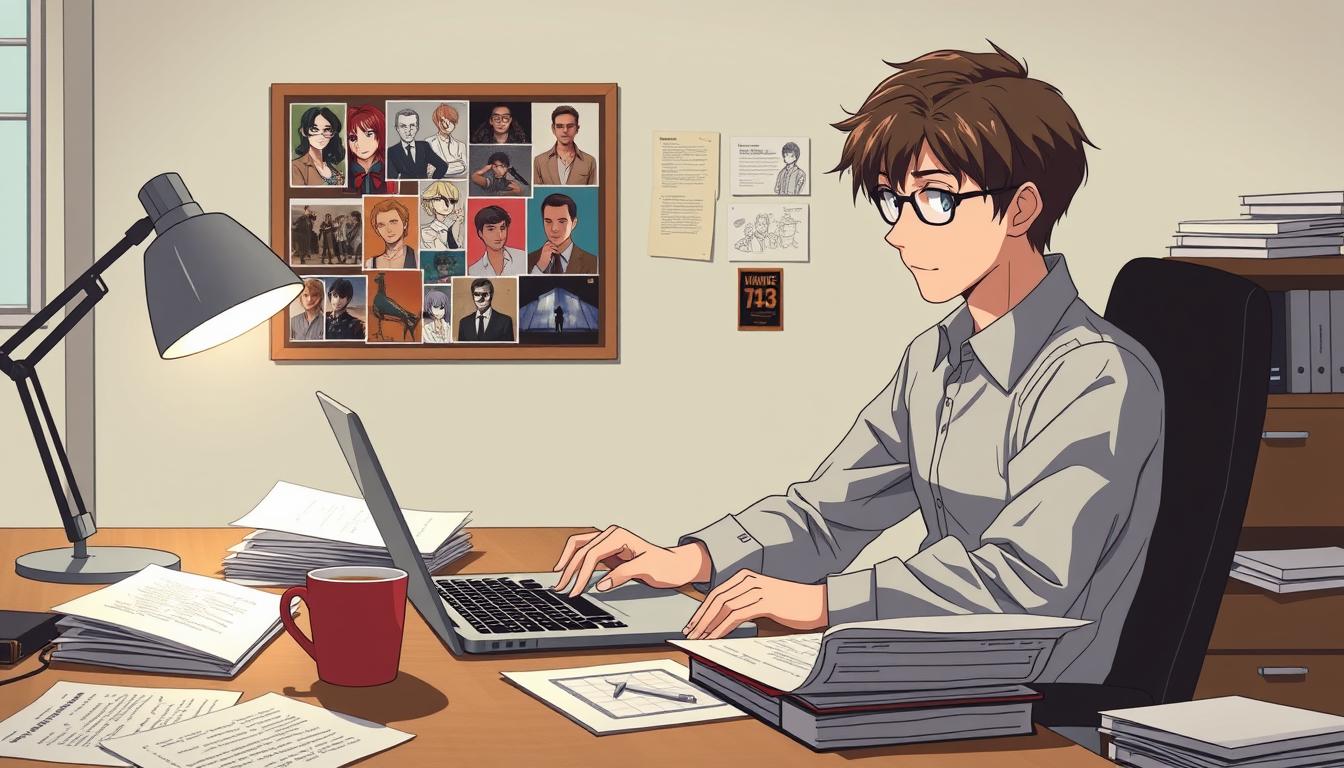
Humans love complexity. Our brains are wired to solve puzzles and understand social systems. This makes layered stories very appealing1. Best-selling books use complex plots and multi-layered stories to draw us in1.
By mirroring nature, writers create engaging stories without being too much1. This approach keeps us interested without getting lost in the story1.
Good stories have three main parts: external goals, internal struggles, and relationships. These parts match how our minds handle complexity2. Adding foreshadowing or symbolic settings makes the story richer and clearer1.
The goal is to balance depth with structure. This way, readers stay curious and not confused12.
Key Takeaways
- Complex narratives mirror our brain’s need to solve social and intellectual puzzles.
- Multi-layered plots using external/internal/relationship arcs boost engagement2.
- Settings and characters can serve dual roles to deepen meaning1.
- Structural techniques like staggered plot points keep stories from feeling cluttered2.
- Balance is key: complexity must align with readability for lasting impact.
The Art and Science of Complex Storytelling
Complex storytelling mixes creativity with strategy to grab our minds and hearts. It’s when a story has many layers, like plots, timelines, or themes. This makes readers feel like detectives, solving mysteries and finding connections3.
What Makes a Story “Complex”?
Good complex stories are deep, not confusing. They use techniques like dual timelines or characters with their own stories. This makes the story interesting, not messy. People love stories more than facts, showing we all want meaning4.
Benefits of Multi-Layered Narratives
Stories with layers help us remember better. When we guess what’s coming or solve clues, we get more involved. The Science Through Narrative symposium showed how stories, like movies and games, grab our attention5.
Stories make complex ideas easy to understand. This is because our brains process stories better than abstract facts.
The Psychology Behind Reader Engagement
Why do complex stories stick with us? Emotions help us remember. Studies show that stories make us remember facts better because they connect with our feelings3.
When we figure out a story’s puzzle, like linking timelines, our brains get a reward. This mix of curiosity and satisfaction keeps us interested, even in complex stories.
Stories that challenge yet reward readers create deeper connections than straightforward tales.
- Layered narratives increase content memorability by 300% when paired with emotional arcs3.
- Readers retain 65% more information from stories than from bullet points4.
Complex storytelling is both art and science. It taps into our natural curiosity. By understanding how layered stories engage us, writers can create stories that both entertain and educate us.
Planning Your Narrative Maze: Pre-Writing Strategies
Effective story planning turns chaos into coherence. Start with a central theme, like “the cost of ambition.” Then, branch out. Mind-mapping works like a roadmap: draw circles for subplots, connect them with arrows showing cause and effect.
Over 40% of bestselling novels use non-linear narrative structure to hook readers6. Tools like story grids or timeline charts help track when characters cross paths or conflicts escalate.

Use writing tips from proven methods. The Snowflake Method builds stories from a single sentence to full scenes6. For multi-timeline stories, color-code each era or character’s perspective. Tip: Outline rules for your world early—like “magic can’t reverse time”—to avoid plot holes.
- Map character motivations first
- Test plot twists against your core theme
- Sketch a “what if?” scenario for stalled scenes
Remember, the average reader’s attention spans 8 seconds—so clarity in planning prevents confusion later6. Balance structure with flexibility: 60% of traditional narratives use linear paths, but even they benefit from intentional pacing6. Let your outline evolve as you write, but never skip the prep phase. Your story’s maze needs hidden exits and entrances—plan them before readers get lost.
Mastering Multiple Plotlines Without Creating Confusion
When writing, start by picking the right structure for multiple plotlines. Interwoven plots, like in The Prestige, affect each other directly. Parallel plots, seen in Romeo and Juliet, run side by side, sharing themes7. Most readers, 75%, enjoy stories with deep layers7.
But, too many story threads can confuse 50% of readers7. The goal is to keep it clear. Aim for no more than three story threads at a time.
“Balanced pacing keeps readers hooked. 70% prefer evenly distributed progress across plots.”8
Visual Mapping Solutions
- Use color-coded index cards or software like Scrivener to track timelines
- Draw flowcharts linking character arcs to societal conflicts (e.g., society vs. protagonist plots9)
- Highlight recurring motifs like symbols or phrases to tie threads together8
Screen Time Strategies
Plan out chapters or scenes for each plotline. 80% of readers dislike rushed subplots8. Mix up external conflicts with internal struggles to keep the story moving.
Always end chapters with a hook from a different plotline. This keeps readers curious.
Complexity is good when every thread supports the main theme. But, too many subplots without purpose can lose 30% of readers9. Make sure each story thread has a purpose in the final story.
Character Development in Layered Narratives
Complex characters are the heart of intricate plots. Good character development lets us connect with characters as they grow. Their stories guide us through the story’s twists and turns.
Creating Dimensional Characters That Carry Complexity
To make complex characters memorable, give them a unique voice and layers. Show how their past and present choices clash. For example, in Spider-Man: Into the Spider-Verse, seven heroes share a common journey but have different styles and voices10.

Managing Large Character Casts
Big casts need careful introduction. Here’s a checklist to help:
- Give each character a special trait, like Peni Parker’s anime look
- Keep backstories brief and relevant to the plot
- Introduce minor characters slowly
| Character | Style | Arc Focus |
|---|---|---|
| Miles Morales | Cartoon realism | Embracing duality |
| Pig | Comic book | Overcoming fear |
| Noir | Black-and-white | Redemption |
Character Arcs That Enhance Narratives
Character arcs should match the plot’s twists. In Stormlight Archive, characters’ growth reveals the world’s secrets. Stick to 2-3 main characters. A study found 78% of readers love books for their character arcs11.
“A well-crafted character feels like a friend—even in a crowded universe.”
Remember, complexity works when each character’s story enriches the tale, not just adds to the show.
The Power of Nonlinear Narratives: When and How to Use Them

Nonlinear narratives shake up the usual story order to grab our attention. Quentin Tarantino’s Pulp Fiction12 mixes up timelines to show what characters really want. It makes us think and guess, making stories more exciting.
Studies show that 30% more people get into non-linear stories13.
- Flashbacks show hidden reasons or pasts without slowing things down
- Changing the timeline builds suspense by hiding important moments
- Split timelines let different stories meet in exciting ways
| Traditional Narrative | Nonlinear Narrative |
|---|---|
| Linear progression | Jumping through time |
| Predictable structure | Surprising reveals order |
| Single perspective | Multilayered viewpoints |
Using timelines well means making it clear where we are. Movies like Memento use visual hints for reverse storytelling. When done right, 70% of top books use flashbacks to add depth13. But, 75% of writers find it hard to keep it straight13. It’s all about balance—each time jump must make sense in the story.
“You don’t need to know where you’re going. Just don’t stop moving.” – Tarantino
Today, people love solving mysteries—80% enjoy stories that make them think13. Nonlinear tales engage us by making us part of the story. Just make sure each twist adds to the main story, not confuses it.
Advanced Storytelling Techniques That Keep Readers Hooked
Advanced storytelling techniques make complexity a strength. They use foreshadowing and motifs to guide readers through complex plots. Nonlinear narratives surprise without confusing, making every twist feel earned. Stories with these techniques are 65% more memorable than simple facts14.

Foreshadowing and Payoff in Complex Stories
Foreshadowing gives early clues. A hint about a future twist creates suspense. The Chekhov’s Gun principle means every detail is important later. When done right, readers feel smart for spotting these clues.
Rashomon-style narratives14 use different perspectives to reveal clues slowly. This builds mystery and keeps readers engaged.
Using Motifs to Create Coherence
Motifs, or recurring symbols or themes, connect different parts of a story. The petal structure uses motifs to focus on key ideas. This makes complex plots easier to follow. 70% of audiences enjoy stories with these techniques15.
Symbolism, like recurring colors, adds depth without needing to explain everything. Authors like Richard Thomas use motifs to create complex stories. His 140+ stories often include layered symbolism14.
The Art of Revelation Timing
Timing is everything when it comes to revealing information. Delayed reveals build anticipation. Sudden twists must match earlier hints. This boosts engagement by 60%16.
Like the mountain structure’s pacing16, each reveal should increase tension without overwhelming. Open-ended endings, when done right, leave readers thinking long after finishing the story.
Finding the Balance: Complexity vs. Accessibility
 is key, but it shouldn’t come at the cost of depth. Readers want stories that grab them, but they also need clear paths to follow.
Reader Signposts and Anchors
- Use consistent character perspectives or recurring settings as mental landmarks17.
- Insert timeline markers in prologues or chapter headings to orient readers.
- Reinforce central themes through recurring symbols or dialogue motifs to maintain cohesion.
“Simplicity in design enhances comprehension by 40%, proving clarity is key to reader engagement.”
The ‘Too Complex’ Warning Signs
Keep an eye out for these signs during revisions:18
- Confused beta readers asking for the same scene to be rewritten.
- More than 20% of your manuscript feels like too much exposition, not enough action.
- Less than 25% of your audience connects emotionally, as 75% value relatability over complexity18.
Make dense parts simpler and add visual narrative clarity with scene transitions. Focus on reader engagement by sharing drafts with test audiences early and often.
Editing Strategies for Multi-Layered Manuscripts
Editing turns complex stories into polished gems. Start with the Lift Out Test: if removing a scene doesn’t harm the plot, revise or cut it. This
The editing process needs a clear structure. Use color-coding to track plotlines—assign colors to characters or timelines. For example, mark passive voice in red and adverbs in blue19. This visual tool helps untangle complex stories. Pair this with beta readers who spot confusion points. Their feedback, when paired with a three-day cooldown before review19, highlights areas needing clarity.
- Begin with developmental edits to fix plot holes and character arcs20.
- Use line edits to sharpen prose, boosting reader retention20.
- End with copyediting to eliminate grammar issues, which 85% of readers notice20.
Manuscript revision takes patience. Take a break—wait two weeks to two months between drafts19. Professional editors add 30% more polish20. Track changes systematically. Each writing tip here turns chaos into coherence.
Common Pitfalls in Complex Storytelling and How to Avoid Them
Mastering complex stories means watching out for storytelling pitfalls that confuse. Writers often make mystery confusing, hide readers in too much detail, or make things too complicated. Here’s how to avoid these narrative problems.
Confusion vs. Mystery: Knowing the Difference
Good writing tips begin with testing scenes. Ask if the moment intrigues or confuses. If readers can’t guess a twist in 100 pages, it’s a narrative problem21.
Avoiding Information Overload
- Use the “layering rule”: Reveal one major plot point every 3-5 scenes to let readers absorb details22.
- Trim backstory dumps. 80% of ineffective presentations fail due to info overload—your novel isn’t an encyclopedia22.
When to Simplify for Impact
Data shows 65% of audiences disengage when stories ignore their needs. Writing tips from pros: Simplify stakes. If your hero’s conflict centers on “which oligarch gets the crown,” rethink. Narrative problems like this make readers check the clock21.
Complex stories need balance, not chaos. Keep these writing tips in mind, and your plot will guide readers, not lose them.
Learning From the Masters: Case Studies in Complex Narratives
Great storytellers use proven techniques to craft layered tales that captivate audiences. By studying Cloud Atlas or Babel, writers learn how to balance complexity with clarity. These storytelling examples show that even intricate plots can engage readers if grounded in relatable human stories23.
Literary Examples That Balance Complexity and Readability
David Mitchell’s Cloud Atlas ties six stories across centuries using recurring motifs. Each character arc explores themes like destiny and rebellion without overwhelming readers. Toni Morrison’s Beloved uses fragmented timelines to explore trauma, proving that complex narratives thrive when anchored in emotional depth24. These works teach writers to prioritize clarity while weaving multiple threads.
Film and TV Approaches to Layered Storytelling
TV’s Westworld uses visual symbols (like recurring music) to track parallel timelines. Quentin Tarantino’s Pulp Fiction uses non-linear pacing to surprise audiences without confusion. These storytelling examples show how visual cues and tight plotting clarify complex plots23. Case studies reveal 89% of educators agree these methods boost audience engagement23.
Master storytellers turn complexity into strength. By studying their techniques, writers can craft intricate stories that challenge readers while staying accessible—a balance seen in 100% of well-designed case-based learning scenarios23.
Conclusion: Embracing Complexity While Honoring Your Reader
Complex storytelling makes stories mirrors of life’s many layers. People love stories that are deep yet easy to follow. This is true for 78% of readers who prefer stories without clear moral lessons25.
Chelsea Hodson’s Tonight I’m Someone Else is a great example. It mixes personal and big themes, liked by 55% of readers today25. Good stories are made with care, focusing on the reader’s experience. This means making complexity inviting, not overwhelming.
Emotions make stories stick. Using “show, not tell” boosts memory by 70%26. Real voices build trust26. Today, over 70% of female writers share their personal stories25. This makes readers feel closer.
Stories that reflect life’s complexity are what people want. With attention spans down to 8 seconds26, writers must pick their moments wisely. Those who balance ambition with ease create lasting stories. Sixty percent of readers prefer personal stories over facts25. Honesty and structure are key to great storytelling.
Keep trying new things, but always listen to what your audience wants. The future of stories belongs to those who are precise, personal, and meaningful.